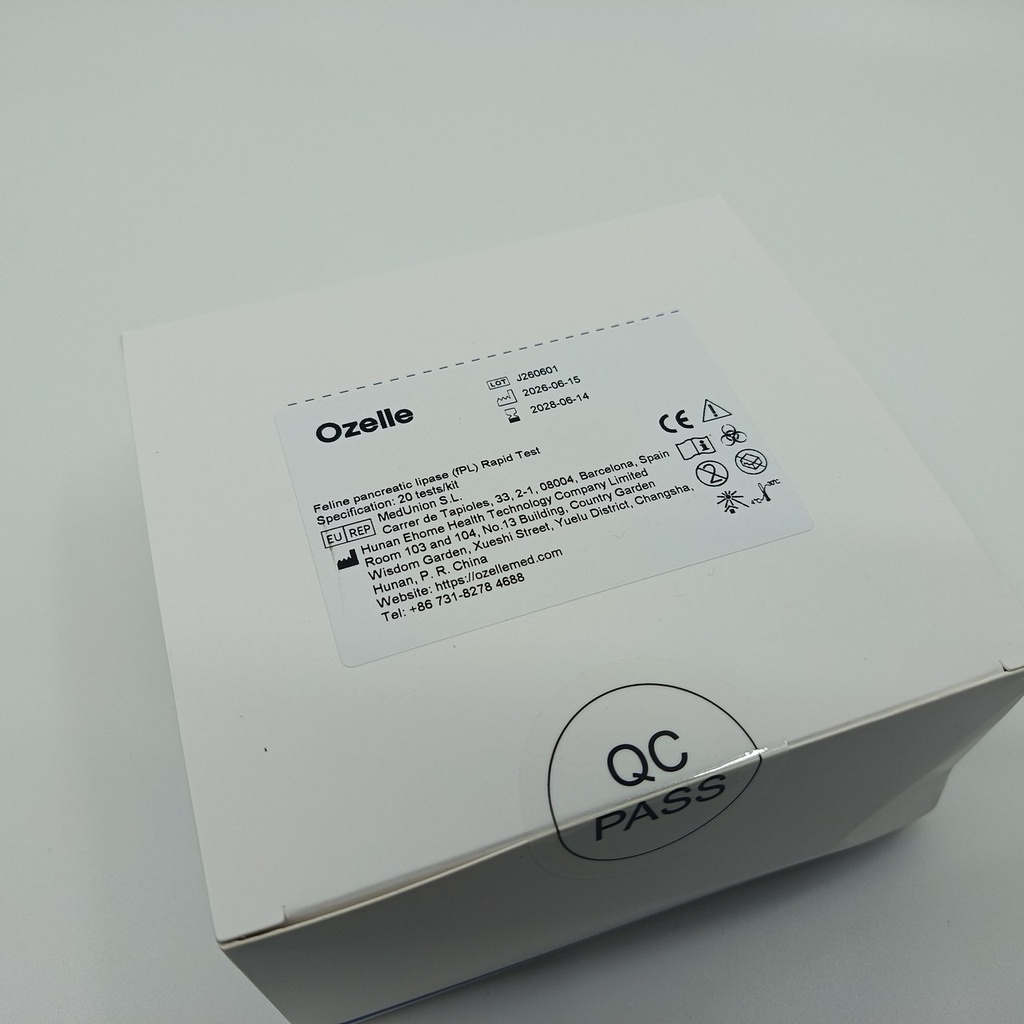
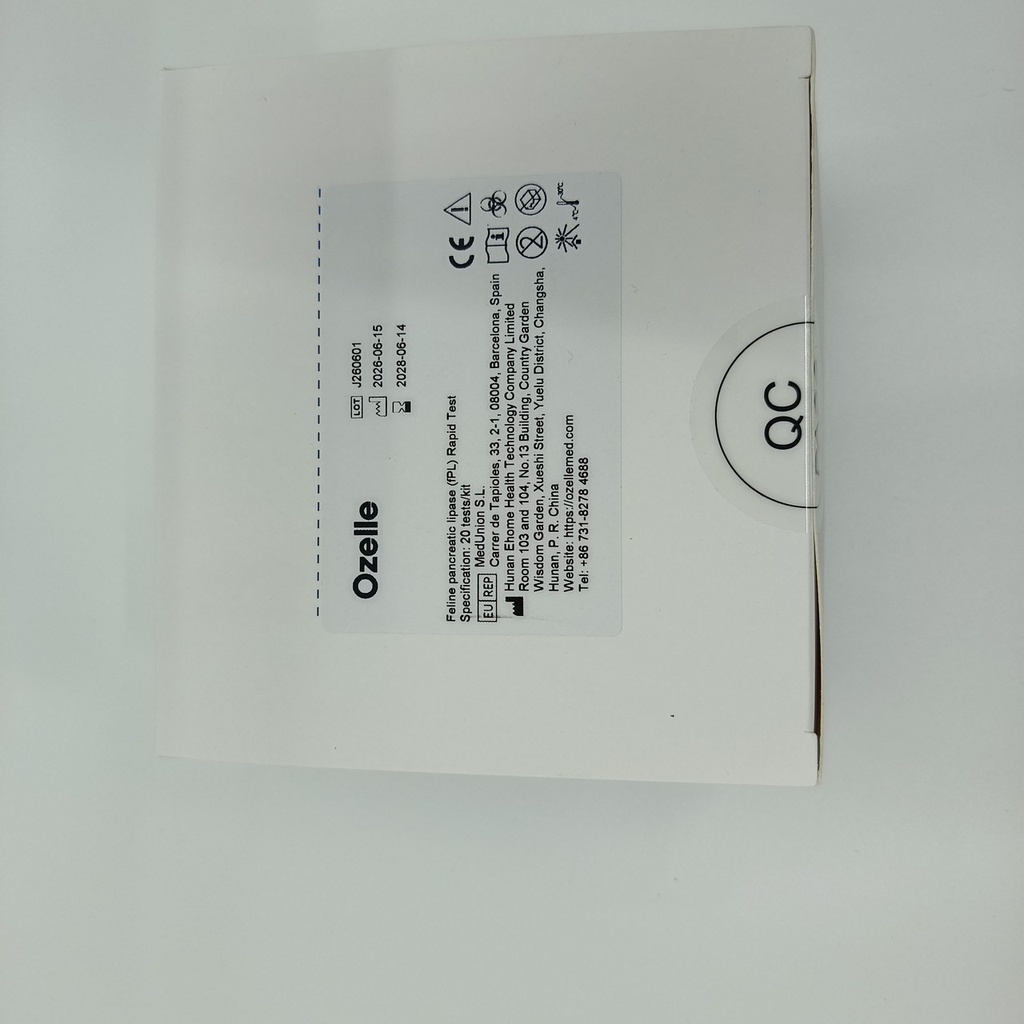
The fPL test is a rapid quantitative test for the concentration of feline pancreas-specific lipase (fPL) in serum or plasma. Clinically, it is used mainly for the auxiliary diagnosis of pancreatitis and for assessing the effect of treatment.
🧪 Test principle
The test employs a quantitative double-antibody sandwich fluorescence immunoassay technique. The sample is mixed with the diluent and the mixture is dispensed into the well of the cartridge. Feline pancreas-specific lipase (fPL) in the sample binds to a fluorescently labelled antibody, and the resulting complex is captured by the corresponding antigen immobilised on the detection line of the nitrocellulose membrane. The more analyte the sample contains, the more labelled antibody accumulates on the detection line and the stronger the measured signal. The concentration is reported in μg/L.
📊 Detection range and interpretation
Detection range of the kit: 0.5–50 μg/L. Samples with values outside this range are reported as <0.5 μg/L or >50 μg/L.
| Result (μg/L) | Significance |
| < 3.5 | Normal |
| 3.5–5.4 | High |
| > 5.4 | Pancreatitis |
The reference values shown are recommended — each laboratory should establish its own reference range. The final assessment is made by a veterinarian on the basis of the clinical picture and all available laboratory data.
The test is intended for use only with the Ozelle EHVT-50 multifunction veterinary analyzer.

%20%D0%BF%D1%80%D0%B8%20%D0%BA%D0%BE%D1%82%D0%BA%D0%B8%20%D0%B7%D0%B0%20Ozelle%20EHVT-50%20VET%20-%2020%20%D0%B1%D1%80.-%D0%BE%D0%BF.?unique=8839c97)


%20%D0%BF%D1%80%D0%B8%20%D0%BA%D0%BE%D1%82%D0%BA%D0%B8%20%D0%B7%D0%B0%20Ozelle%20EHVT-50%20VET%20-%2020%20%D0%B1%D1%80.-%D0%BE%D0%BF.?unique=8839c97)